Summer is drawing to a close. The kids are back in school, and it is time for me to kick my own studies back in to high gear if I want even a microscopic chance of passing my Master of Wine (MW) exams next June. So while most diligent students are hitting the books, I will be hitting the bottle…hard. It is an interesting sight to see a new mother rocking her baby in his bouncy chair while simultaneously blind tasting a flight of wines (cue the boos and hisses on my awesome parenting!). But that is how I will be spending the next 9 months. Each week a new flight, tasted with a fellow MW candidate, and a new tasting article for you lucky folks.
Our journey begins with a comparative tasting of Sauvignon Blanc from the Loire Valley, Bordeaux, New Zealand, Chile and South Africa. This zesty white is generally high in acidity, dry, light bodied, with moderate alcohol; the definition of thirst quenching. Aromas range from citrus, grassy, gooseberry and mineral to more overt tropical notes, stone fruits and blackcurrant buds (the prettier, French description for the aroma Anglophones describe as “cat pee”). With the exception of sweet wines made from botrytised Sémillon/ Sauvignon Blanc blends, Sauvignon Blanc is generally meant to be drunk young (within 2 – 3 years of harvest), while the bright fruit aromas and bracing acidity are at their height.
I first discovered how seriously good Sauvignon Blanc can be on a visit to the Loire Valley, the presumed origin of the grape, shortly after I moved to France ten years ago. The charming, 11th century village of Sancerre is perched on a hilltop looking down on its vineyards and pastures. The streets are lined with signs boasting wine tastings and little cafés where my friends and I ate sharp, earthy Crottin de Chavignol goat cheese, the perfect partner for the local tart, flinty white wine. After an epic, 4-hour tasting with Alphonse Mellot in his labyrinthine cellars, complete with scantily-clad ladies astride model bi-planes strung from the ceiling, I was hooked on Sancerre. Elegant and light bodied, with searing acidity, and delicate citrus, gooseberry and mineral-rich aromatics…impossible not to love. Neighbouring Pouilly Fumé makes a similarly whites, though generally in a richer and broader style.
A school tasting trip to the Graves area South of Bordeaux revealed a totally different style of Sauvignon Blanc to me. First of all because they tend to blend with the Sémillon grape, and secondly due to the often liberal use of French oak. The acidity is still quite striking, but the wines have more body and a subtly creamy, nutty texture. Aromas include lemon, grassy notes, currant bud, all underpinned by the oak flavours.
While France is its historic home, New Zealand claims to be the new king of Sauvignon Blanc. The majority of plantings come from the cool Marlborough vineyard on the South Island. Intense, “in your face” grassy, asparagus and gooseberry aromas dominate here, with riper examples showing lots passion fruit and peach notes. Most wines are unoaked, with racy acidity, light body and moderate alcohol.
Less well known currently, but growing rapidly in reputation are the cooler coastal areas of Chile (especially the Casablanca and the San Antonio Vallys) and South Africa (Western Cape coastal region and Cape South Coast). Both countries produce a range of styles, from lean and crisp to more lush and tropical. Their Sauvignon Blancs are regularly described as being mid-way between the restrained, elegant style of the old world and the overt, heady new world offers. I had the opportunity to taste some fantastically vibrant examples from the Walker Bay area South East of Cape Town when I worked there. The ocean breezes drifting in from the South Atlantic Ocean give a zesty, saline finish to the wines.
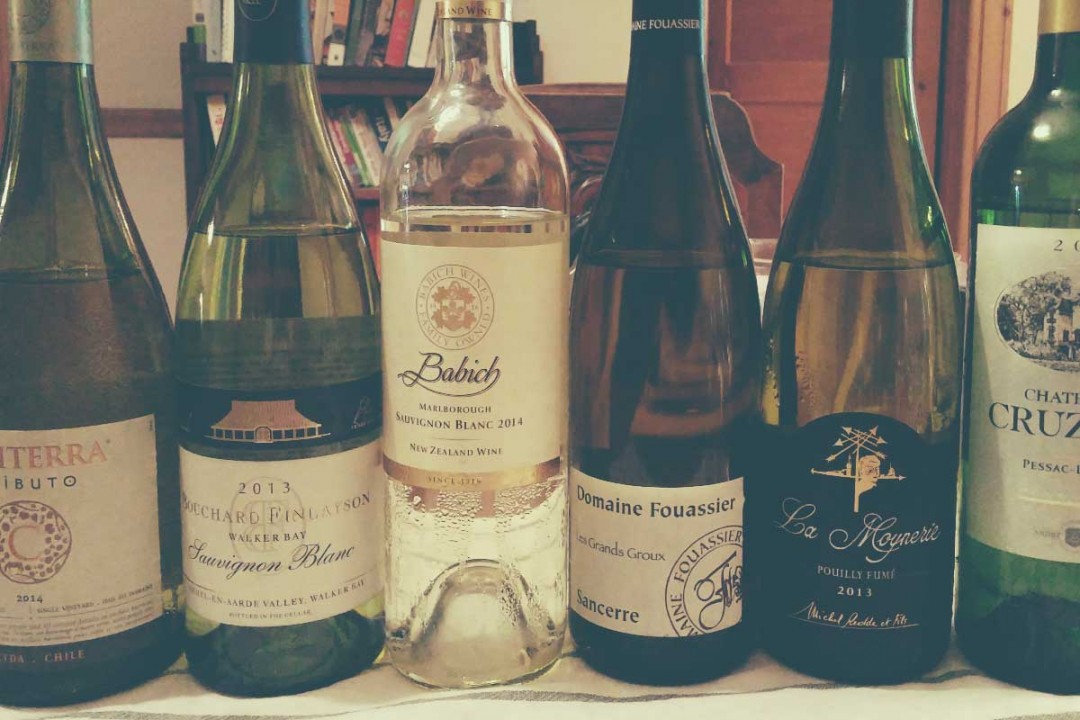
For the purposes of this initial overview tasting, I chose classic examples from the following producers (What do VW, PW & LW mean? Click on my scoring system for the answer):
Domaine Fouassier Sancerre “Les Grands Groux” 2013 – 92pts. PW
Domaine Fouassier farms his vineyard according to organic, and where possible, biodynamic principles. This wine shows excellent Sancerre typicity with elegant aromas of lemon, green apple and white florals hints on the nose. It has bracing acidity, a light body, integrated alcohol and an intriguing chalky minerality on the medium length finish. Very pleasant and balanced. Lacks the concentration and depth of flavour of top Sancerre.
Where to buy: SAQ (26.10$)
Michel Redde “La Moynerie” Pouilly Fumé 2013 – 91pts. PW
The third generation of Redde sons are currently running this 42 hectare estate in Pouilly Fumé. Grapes planted on flint, limestone and marl soils are blended here to create a mineral-laden nose, underpinned with citrus aromas. Vibrant acidity gives way to a rounded, smooth mid-palate. The finish is lifted and mineral. Highly drinkable and good value for the price, though not especially complex.
Where to buy: SAQ (25.75$)
Château Cruzeau Pessac-Léognan 2010 – 89pts. PW
Château Cruzeau is owned by the highly reputed Bordeaux producer, André Lurton. A deeper yellow gold colour is the first indication of the richer, fuller Bordeaux Sauvignon Blanc style. Intense currant bud, lemongrass, apple and oak aromas abound. Fresh, juicy acidity marks the palate, with a medium bodied, subtly creamy mid-palate and reasonable oak integration through-out. Short finish.
Where to buy: LCBO (25.25$), SAQ (24.95$)
Babich Marlborough Sauvignon Blanc 2014 – 93pts. LW
Family owned since 1916, this large, award winning estate offers high quality at incredible value. Pale, white gold. Surprisingly elegant; with less of the pungent grassiness of many comparably priced Marlborough Sauvignon Blancs. The nose is refined, with lemon, passionfruit, floral and subtle mineral notes. Lean, with racy acidity, lots of juicy passionfruit and lemon flavours and a soft, rounded finish. At less than 20$, this is a bargain.
Where to buy: LCBO (15.95$), SAQ (19.65$)
Caliterra “Tributo” Sauvignon Blanc (Leyda, Chile) – 85pts. VW
An entry level brand from the owners of leading Chilean winery Errazuriz. Caliterra “Tributo” is a clean, well-made but fairly simple offering, with pungent vegetal, guava and lemon notes on the nose. Crisp and light-bodied, with moderate alcohol. Easy drinking but unexciting for the price.
Where to buy: SAQ (16.95$)
Bouchard-Finlayson Walker Bay Sauvignon Blanc – 88pts. PW
This 25 year old winery sits on an incredible plot of land in the stunning Hemel-en-Aarde (Heaven and earth) Valley in the Walker Bay. Their house Sauvignon Blanc is an intensely aromatic offering though the lime, verbena, and grassy notes have a slightly acrid quality to them. More pleasant on the palate; smooth and light bodied with moderate acidity, lots of juicy peach and lime aromas through the finish.
Where to buy: SAQ (22.95$)